
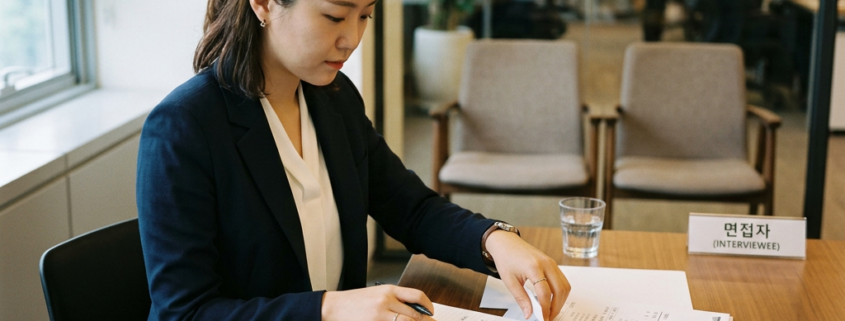
13 Interview Mistakes to Avoid When Job Hunting in the U.S. (Must-Read for College Students & Job Seekers)
Getting Started
If you’re a student heading into your first U.S. job interview, knowing the most common US job interview mistakes ahead of time can make a huge difference. A strong resume gets your foot in the door, but the interview is what actually seals the deal. For international students landing their first job in the U.S., or for students prepping for internships and full-time offers, most interview slip-ups don’t come from a lack of skill. Instead, they come from cultural mismatches that recruiters notice right away.
Modesty is valued in Korean culture, but in a U.S. interview, the opposite tends to score points: confidence, self-advocacy, and being able to talk about your own accomplishments without hesitation. This article breaks down 13 US job interview mistakes that recruiters flag most often: the kind that trip up candidates who are otherwise fully qualified for the role.
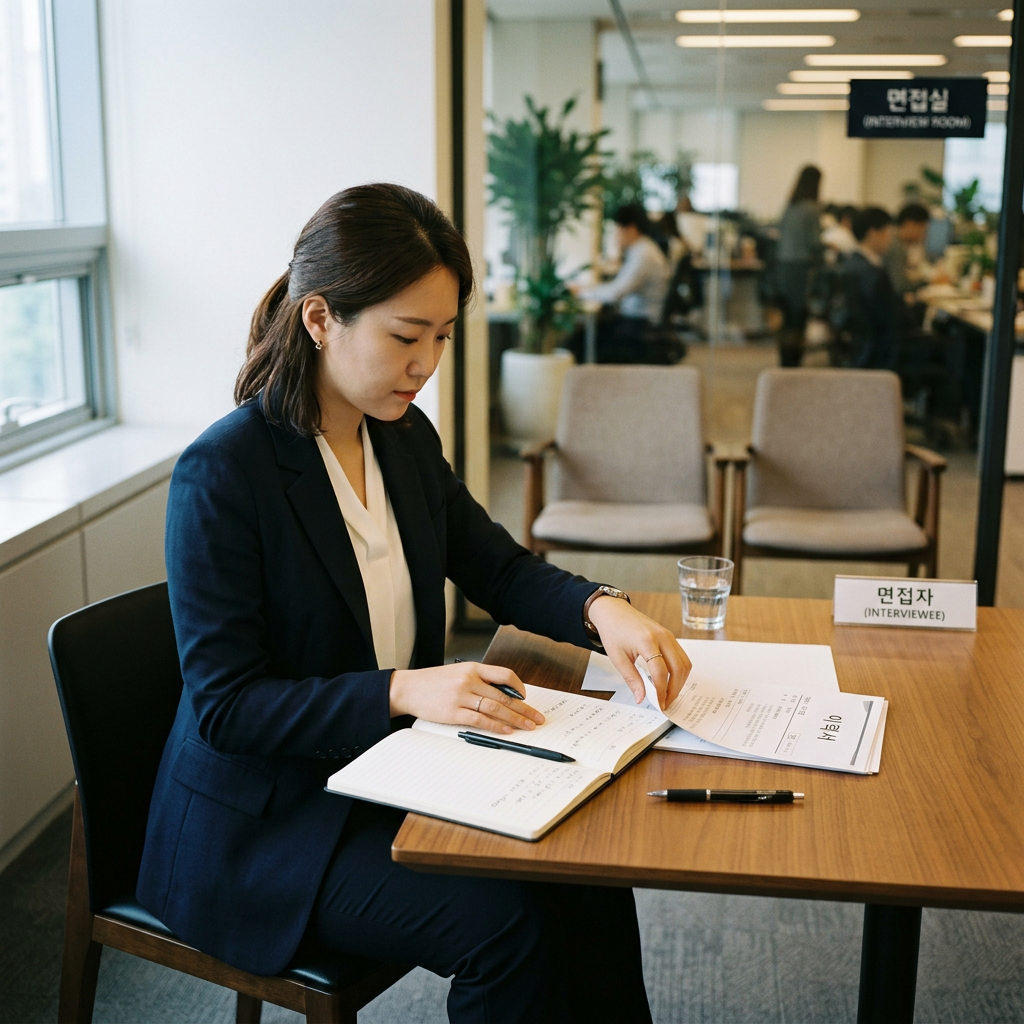
1. Showing Up Underdressed (or Overdressed)
Dress for the type of interview you’re walking into. When in doubt, it’s always safer to be a notch more formal than you think you need to be. Avoid loud colors, anything too revealing, or an outfit that looks wrinkled; this applies no matter your gender.
Example: Even for a startup interview, don’t just assume “casual is fine” and show up in flip-flops and shorts. A safe bet for business casual is a collared shirt with slacks, or a blazer with slacks/a skirt.
Consultant’s Tip: “Business casual” gets thrown around a lot in the U.S., but it doesn’t mean sloppy; it means polished and put-together, without being overly formal. If you’re not sure what’s expected, check the company’s LinkedIn page or Instagram to see how current employees actually dress.
2. Not Prepping Answers to the Classic Questions
“What’s your biggest weakness?” “Where do you see yourself in 10 years?” “Why do you want to work here?” These questions show up in nearly every interview. If you haven’t thought through your answers beforehand, you’ll end up rambling or fumbling for something on the spot.
Example: Instead of a vague answer like “My weakness is that I’m a perfectionist,” go with something specific and growth-oriented: “I tend to get so focused on the details that I sometimes lose track of the bigger timeline, so I’ve started using a to-do list where I flag deadlines first, and that’s helped me stay on track.” Pairing a real example with the steps you’ve taken to improve is far more convincing.
Consultant’s Tip: Practice structuring your answers with the STAR method (Situation-Task-Action-Result). It’s much easier to remember your story if you anchor it around a few key words rather than trying to memorize a script word-for-word.
3. Not Having Any Questions Ready for the Interviewer
Not preparing questions to ask at the end is a common mistake. Good questions signal that you’re genuinely interested in the role, not just trying to land any job.
Example: Questions like “What does success look like in this role during the first three months?” or “How do you measure success on this team?” show the interviewer you came prepared.
Consultant’s Tip: Have at least two or three questions ready, but save practical topics like PTO or vacation policy for later in the process, since asking about them too early can come across as the wrong priority.
4. Skipping Research on the Company
Walking into an interview knowing nothing about the company or the role is a red flag. Doing your homework lets you have a real conversation and ask sharper questions.
Example: Don’t stop at the “About Us” page. Look up recent news, product launches, and the company’s mission and core values so you’ll have a real answer ready when they ask “Why us?”
Consultant’s Tip: This is the same logic as writing a “Why This School” essay for college applications. The more thoroughly you treat company research the way you’d treat school research, the better your interview outcomes tend to be.
5. Being Too Modest to Talk Up Your Own Work
This is one of the most common mistakes Korean students make in U.S. interviews. Saying things like “It wasn’t just me, my teammates helped a lot” or “It wasn’t really that big of an accomplishment” reads as humble back home, but in a U.S. interview, it can come across as a lack of confidence or uncertainty about your own results.
In U.S. interview culture, stating your contributions clearly, specifically, and with numbers when possible is the norm, and it’s what recruiters expect.
Example: Instead of just saying “I worked on a team project,” try: “I led a 4-person team on a data analysis project, proposed a method that cut processing time by 30% compared to our previous approach, and implemented it myself.” Practice owning your role and your results, with specific numbers attached.
Consultant’s Tip: If self-promotion feels uncomfortable, write out your “brag list” in English before the interview, and practice starting each sentence with an active verb like “I led / I improved / I created.” Being modest never bit anyone after the interview was already over.
6. Botching “Tell Me About Yourself”
Almost every U.S. interview opens with this question. A lot of students misread it as small talk and either ramble on about their birthday, family, or hobbies, or swing the other way and say something too short like “I’m just a regular student.”
What this question is really asking is: summarize your career story in under two minutes. The interviewer is using your answer to gauge how clearly and logically you can organize your own experience.
Example: “I majored in business at XYZ University, where I got interested in marketing and organized a social media campaign for a marketing club that grew our followers by 40%. That got me hooked on data-driven marketing, and last summer I put those skills to work in a brand campaign internship, which is why I’m excited about a role where I can build on that.” Structure your answer as past (major/experience) → present (core strengths) → future (why this role).
Consultant’s Tip: This answer shapes the interviewer’s first impression of the entire conversation, so practice a 30-second, 1-minute, and 2-minute version out loud, multiple times. Focus less on your resume and more on “why you’re the right fit for this role.”
7. Skipping Eye Contact and Body Language
In Korean culture, sustained eye contact can sometimes read as a little too intense or even rude. In U.S. interview culture, it’s the opposite: appropriate eye contact signals confidence and trustworthiness. Constantly looking away, crossing your arms, or speaking too quietly can come across as timid and unsure of yourself.
Example: When answering, look at the interviewer’s eyes (or the camera lens, if it’s a video interview), and nod occasionally to show you’re actively listening. Keep your handshake firm but not overpowering, and your posture relaxed but upright.
Consultant’s Tip: Nailing eye contact from day one is hard. Do a few mock interviews with friends or family and practice a natural rhythm: holding eye contact for 3-5 seconds, glancing away briefly, then coming back.
8. Bringing Up Salary Too Soon
Salary matters, obviously, but asking about it too early in the process is a mistake. In most cases, it’s standard for the company to bring it up first.
Consultant’s Tip: In internship and entry-level interviews especially, it makes a much better impression to lead with genuine interest in learning opportunities and growth potential rather than compensation. Worth noting: some U.S. states legally require companies to post salary ranges upfront, so it’s also worth checking the job posting for your specific location beforehand.
9. Video Interview (Zoom/Teams) Mistakes
A lot of U.S. companies run first-round interviews over video now, and there’s a specific set of mistakes that tend to happen only in this format.
- Background and lighting: A messy room, backlighting, or a dim screen all look unprofessional on camera.
- Log in early: Join at least 5-10 minutes ahead of time to check your camera, mic, and internet connection.
- Staring at your own face instead of the camera: If you keep looking at yourself on screen instead of the camera lens, it comes across as avoiding eye contact from the interviewer’s side. Look at the camera when you’re speaking.
- Background noise: Turn off laptop notifications and make sure there’s no background chatter or pets that might interrupt.
Example: The day before, do a test call under the same lighting conditions and at the same time of day as your actual interview, and prop your laptop up on a stack of books so the camera is at eye level. This makes a noticeable difference in how confident you come across.
Consultant’s Tip: If you’re doing a video interview with a U.S. company from Korea, time zone mix-ups happen more often than you’d think. Always double-check the time listed in your interview invite email against your own local time zone.
10. Bringing Up Other Offers Too Casually
Mentioning “I already have an offer from another company” can seem like a smart negotiating move, but it can easily backfire. It might make the interviewer feel like you’re not serious about this particular seat.
Consultant’s Tip: If you’re genuinely interviewing with multiple companies at once and facing a tight decision deadline, it’s safer to bring this up only around timeline questions rather than as a bragging point, something like, “I’m also finishing up a process elsewhere, so could you let me know when I might expect a decision?”
11. Skipping the Thank-You Email
In Korean interview culture, this step is optional. In the U.S., sending a thank-you email within 24 hours of your interview is basically expected. Skipping it can make you look less interested, or less prepared, than other candidates.
Example: “Thank you for your time today. I especially enjoyed our conversation about the XYZ project, and I’m even more confident my data analysis background would be a great fit for the team.” Referencing one specific detail from your conversation makes the note feel a lot more genuine than a generic thank-you.
Consultant’s Tip: If you interviewed with multiple people, send each of them a slightly different note. Double-check you have the correct spelling of everyone’s name and title from the interview.
12. Trashing a Former Job, School, or Professor
Saying things like “My old team lead was so unreasonable, it was miserable” or “That professor’s class was terrible” is genuinely risky in a U.S. interview. Regardless of whether it’s true, the interviewer can easily hear it as a signal that you might talk about their company the same way down the line.
Example: For a question like “What was the hardest part of your last internship?” a safe answer is something like: “It was an environment where priorities shifted constantly, so it was tough at first, but I built the habit of maintaining a weekly to-do list, and that actually taught me how to stay flexible and adapt.” Reframe negative situations as lessons and growth rather than complaints.
Consultant’s Tip: This same principle applies directly to writing your Common App activities list or college essays. Making it a habit to frame experiences around “what I learned” rather than “what went wrong” pays off in essay writing, too, not just interviews.
13. Lying
Exaggerating your resume a little is common, but flat-out lying, whether on your resume or in the interview, is completely off-limits. Honesty is the single most important asset a candidate has. Claiming experience you don’t actually have almost always shows eventually, and many U.S. companies routinely run reference checks to verify your background.
Wrapping Up
These 13 US job interview mistakes have nothing to do with a flashy resume or standout talent. They’re mistakes anyone can avoid with just a little awareness. Items like #5 (being too modest), #6 (fumbling your self-intro), #7 (eye contact), #9 (video interviews), and #11 (the thank-you email) come directly from the cultural gap between Korean-style modesty and U.S. interview norms, but they’re all things you can prep for and get comfortable with in advance.
If your interviews keep going well but you’re not converting them into offers, it’s worth taking a hard look at whether you’re repeating any of these US job interview mistakes in your demeanor and communication style before your resume or cover letter. Alongside your interview prep, check out our guide on how to land a U.S. internship, and for the latest interview trends, the Indeed Career Guide is a solid resource.
For the Korean-language version of this guide, see 미국 취업 면접에서 흔한 실수 13가지.
Quick-Reference Checklist: US Job Interview Mistakes to Avoid
- Dress a notch more formal than the company culture, not less
- Prep answers to common questions using the STAR method
- Have 2-3 thoughtful questions ready for the interviewer
- Always research the company and role beforehand
- Sell your achievements with specifics and numbers, not modesty
- Structure “Tell me about yourself” as past-present-future, in 30 sec / 1 min / 2 min versions
- Practice confident eye contact and open body language
- Handle video interviews: check background, lighting, internet, and timezone in advance
- Bring up other offers carefully, not casually
- Send a thank-you email within 24 hours
- Reframe past negative experiences as lessons learned
- Honesty is always the best strategy
This article was written based on real coaching experience with students in U.S. college admissions and career consulting.